Healthy hair isn’t always simply “precise genetics” or one miracle oil. It is the end result of constant, low-harm behavior that shield the hair fiber and preserve the scalp balanced. If your aim is more potent, shinier hair with less breakage and fewer cut up ends, the most vital concept is that this:
Hair care is virtually scalp care and harm manage.
Your scalp is dwelling skin that produces hair. Your hair duration is a non-residing fiber that can be covered, but no longer “healed” like skin. So the habitual that works exceptional is one which keeps the scalp easy and calm, then reduces friction, warmth, and chemical stress on the strands.
This manual is a sensible, lengthy, step-via-step playbook. Use it to build a habitual that fits your hair kind and way of life. (This is preferred training, not a scientific prognosis. If you have surprising heavy losing, patchy hair loss, or scalp ache, it’s miles exceptional to seek advice from a dermatologist.)
Before the tips: Understand what makes hair look healthy

When people say “healthy hair” they usually mean these visible sign:
- Shine that looks smooth, not greasy
- Ends that look thick, not see-through
- Less frizz and fewer flyaways
- Hair that feels soft and detangles easily
- Less breakage when combing
- A scalp that feels comfortable not itchy or flaky
Those results come from these causes:
- A clean, balanced scalp with minimal irritation
- Cuticles that are lying flat (less roughness equals more shine)
- Less daily friction (towels, brushing, tight styles)
- Controlled heat and smarter chemical choices
- Enough conditioning and moisture where hair needs it
- Good nutrition, sleep and overall health support
Now let’s build the routine.
Tip 1) Wash based on your scalp’s needs, not a fixed schedule
Some human beings need frequent washing due to the fact their scalp produces greater oil. Others want less washing because their scalp is dry or their hair texture holds onto moisture longer.
A easy wash frequency guide
- Oily scalp, great hair: wash every 1 to 2 days
- Normal scalp: wash each 2 to four days
- Dry scalp, curly or coily hair: wash weekly or as wished
- Heavy product customers (gels, wax, hairspray): wash often sufficient to keep away from buildup
The goal
Your scalp have to sense smooth and snug, now not greasy and not tight. If your scalp itches, smells, or has heavy flakes, you will be ready too lengthy among washes. If your hair ends experience dry and tough, you will be washing too aggressively or no longer conditioning sufficient.
Tip 2) Shampoo the scalp only, and keep it gentle
Your scalp is where the oil and buildup stay, so shampoo belongs there. The duration of your hair does no longer need direct scrubbing most of the time. When you rinse, shampoo water flows through the lengths and is commonly sufficient to smooth them lightly.
Best technique
- Wet hair thoroughly.
- Apply shampoo to scalp zones: hairline crown in the back of ear and nape.
- Massage lightly with fingertips no longer nail.
- Rinse well, mainly behind the head.
Common mistake
Scrubbing the length of your hair like a cloth. This increases tangles and damages the cuticle, which increases frizz and dullness.
If you have buildup
If you use heavy oils, waxe or style gel you may occasionally need to use a clarifying shampoo. But do now not overdo it. Clarifying too often can leave hair dry and rough. A better approach is to clarify only when needed, then follow with a deep conditioner.
Tip 3) Condition every wash, but apply it correctly

Conditioner is the “anti-friction” step of hair care. It helps smooth the cuticle, reduce tangles protect from breakage, and improve shine. If you skip conditioner, your hair is more likely to knot, and knots become breakage.
Where conditioner goes
- Fine hair: mid-lengths to ends
- Thick, curly, coily, or dry hair: through the lengths, and sometimes closer to roots if scalp is not oily
- Scalp: usually avoid unless the product is designed for scalp, or you have very dry scalp and your product is gentle
How long to leave it
Two to five minutes is enough for daily conditioner. Deep conditioner usually needs longer, depending on the product.
Tip 4) Detangle in a way that prevents breakage
Most “hair fall” people see in the shower is actually a mix of:
- normal shedding hairs
- broken hairs from tangles and rough detangling
Hair is more fragile when wet so the way you detangle matters.
The safest detangling method
- Detangle when hair has slip (conditioner in the shower or leave-in after).
- Start at the ends.
- Move upward slowly.
- Use a wide tooth comb or your fingers first.
Avoid
- Aggressive brushing from root to end on wet hair
- Tugging through knots
- Detangling fast when you are in hurry
If braiding takes too long you need more conditioning a better leave-in, or a haircut to remove damaged end.
Tip 5) Dry your hair with low friction (your towel might be causing damage)
Change the way you dry your hair is one of the simplest ways to improve shine. Friction from rough towel rubbing lifts the cuticle and causes frizz.
Better drying steps
- Squeeze water out gently together with your arms.
- Use a microfiber towel or smooth cotton T shirt.
- Press and squeeze, do now not rub.
- Let hair air-dry partly before warmness styling.
Why this works
Less friction way cuticles live flatter, and flatter cuticles replicate mild better, which looks like shine.
Tip 6) Control heat like a professional, and always protect your hair
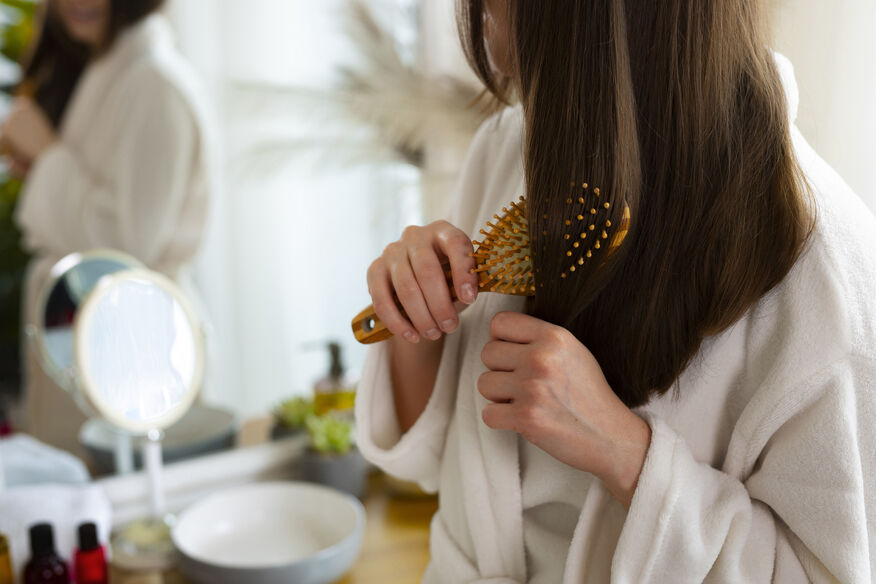
Heat equipment could make hair look smooth quickly, but repeated excessive heat weakens hair over time. If you want robust and bright hair, deal with warmth as a device, now not a every day requirement.
Heat rules that protect shine and strength
- Let hair air dry 70 to 80 percent first.
- Use the lowest heat that works.
- Use fewer passes with a flat iron.
- Use heat protectant every time.
- Do not straighten wet or damp hair.
If your hair feel dry and crunchy after style
That is a sign of too much heat or too frequent heat. Reduce your heat days and improve conditioning.
Tip 7) Use deep conditioning strategically and consistently
Deep conditioning is especially useful if you:
- color or bleach your hair
- use heat tools
- have curly or coily texture
- live in dry weather
- notice roughness and tangles by day two or three after washing
A simple weekly plan
- One deep conditioning session per week
- A leave-in conditioner on wash day for dryness or frizz
- A lightweight serum on ends if needed for shine
How to deep condition correctly
- Apply after shampooing.
- Use enough product to coat the lengths.
- Leave it on for the recommended time.
- Rinse thoroughly.
A mask will not fix split ends permanently but it can smooth the hair and reduce breakage which helps you keep length.
Tip 8) Avoid tight hairstyles and constant tension
Over time, the hairline and temples may also slender in case you wear tight buns, ponytails, or braids often . This is not “normal shedding.” It is damage from tension. This can become permanent if it continues.
Signs your hairstyle is too tight
- Scalp pain or headache
- Small bumps along hairline
- Tender scalp after removing the style
- Thinning edges or temples
Better alternatives
- Loose ponytails
- Low buns
- Soft scrunchies
- Protective styles that do not pull
- Changing your part regularly
If your goal is thick healthy hair, comfort matters. If it hurts loosen it.
Tip 9) Treat the scalp like skincare: manage dandruff , itch and buildup early
A vibrant hair habitual will fail if the scalp is indignant. Many people try to restoration scalp issues with heavy oils, but that could get worse buildup in case you are liable to dandruff or oily scalp.
Healthy scalp habits
- Do not scratch with nails.
- Wash regularly sufficient to save you buildup.
- Rinse thoroughly so no shampoo stays at roots.
- If you operate oil, use it lightly and wash it out properly.
If you have dandruff
Try an anti-dandruff shampoo always for some weeks. Many human beings end too early. Dandruff care generally desires repeated use. If flakes are thick, itchy, and continual, it is able to be extra than simple dandruff, and it’s miles really worth getting clinical steering.
Tip 10) Support hair growth and strength from the inside
Hair is fabricated from protein and relies upon on typical fitness. If vitamins is bad, calorie intake is just too low, or you have got deficiencies, hair can turn out to be weaker and shedding can boom.
Food first basic
- Nuts, seed and olive oil are desirable resources of fats.
- Enough general calories, now not crash weight loss program
- Good hydration
Supplements
Do no longer blindly take high-dose hair dietary supplements. If you observed deficiency, it’s far higher to test instead of bet. Too much of certain nutrients also can motive problems.
Bonus section: The “Shine Formula” (how to get shiny hair without making it oily)
People often confuse shine with oiliness. Real shine comes from a smooth cuticle. Oil can add shine but only if the hair surface is smooth.
The shine routine
- Use conditioner properly
- Use a microfiber towel
- Use a small amount of leave-in or serum only on ends
- Limit heat and use protectant
- Trim split ends regularly
- Avoid harsh brushing and friction
How to apply serum for shine
- Rub a tiny amount between palms.
- Apply only on the last third of your hair length.
- Do not apply at roots.
Too much serum makes hair look greasy. Small amount makes it glossy.
Build your perfect routine by hair type
Routine for oily scalp and fine hair
- Shampoo every 1 to 2 days
- Use a lightweight conditioner on ends
Avoid heavy oils near scalp
- Use dry shampoo occasionally not daily for weeks
- Clarify occasionally if you use styling products often
Routine for normal wavy hair
- Shampoo every 2 to 4 days
- Condition mid lengths to ends
- Use a leave-in if frizzy
- Heat styling limited, always protected
- Weekly mask if ends feel rough
Routine for curly hair
- Shampoo weekly or as need
- Condition generously and detangle in shower
- Use leave-in conditioner and curl cream if need
- Avoid rough towel rubbing
- Use a diffuser on low heat if you want faster dry
Routine for coily hair
- Wash weekly or longer if scalp stays comfortable
- Use rich conditioner and deep conditioner weekly
- Detangle gently with lots of slip
- Use protective styles that do not pull edges
- Seal ends lightly if they dry out fast
Routine for color treat and damaged hair
- Use gentler shampoo and avoid frequent clarifying
- Deep condition weekly
- Reduce heat styling
- Trim split ends more regularly
- Use bond repair products if your hair is bleached or heavily processed
Common problems and fixes
Problem: Hair look dull
Common causes:
- buildup
- rough towel drying
- too much heat
- not enough conditioner
Fix:
- clarify once, then deep condition
- switch to microfiber towel
- reduce heat and use protectant
- use a tiny amount of serum on ends
Problem: Hair breaks easily
Common causes:
- rough detangling
- tight hairstyles
- heat damage
Fix:
- detangle gently with conditioner
- loosen styles
- reduce heat
- add weekly deep conditioning
Problem: Frizz is out of control
Common causes:
- dry hair
- cuticle damage from friction and heat
Fix:
- conditioner every wash
- leave-in on wash day
- microfiber drying
- reduce brushing dry hair
- use a small amount of serum to smooth
Problem: Hair fall is increasing
Some shedding is normal but sudden shedding that last week need attention.
Fix:
- check stress, diet, sleep and recent illness
- stop very tight styles
- keep scalp clean and calm
- if heavy shedding continues consult a dermatologist
Smart habits that make big difference
Sleep safety
- Use silk or satin pillowcase to lessen friction
- Tie hair loosely or use a gentle bonnet if your hair tangles without difficulty
Water first-rate
Hard water could make hair sense difficult and stupid. If your hair feels dry regardless of what, remember a shower clear out. This isn’t constantly essential, but it could assist a few human beings.
Trimming is not the enemy
Trimming does no longer make hair develop faster, however it prevents cut up ends from travelling up the hair shaft. If you want long hair, you ought to shield ends.
A simple weekly schedule you can follow
If you wash two instances in line with week
- Wash day 1: shampoo scalp, conditioner, depart-in, air dry lightly
- Midweek: refresh with light depart-in spray or water-based mist
- Wash day 2: shampoo scalp, deep conditioner, serum on ends
If you wash each different day
- Alternate among a gentle shampoo and a lighter wash
- Conditioner each time
- One weekly mask
- Heat equipment restricted to special events
Conclusion
Healthy, strong, vibrant hair comes from consistency, no longer extremes. If you bear in mind handiest 5 matters from this guide, do not forget these:
- Wash based totally for your scalp wishes
- Shampoo the scalp and condition the lengths
- Detangle lightly and decrease friction
- Control warmness and always guard hair
- Support hair with accurate nutrition, sleep, and occasional-anxiety styling
I will design customized week regimen with precise wash day product kinds and an easy to follow plan if you tell me your hair type (straight, wavy, curly, coil) your primary issue (frizz, breakage, dandruff, hair fall and oily scalp) and whether you use heat or color.
 3
3
 20
20
 20
20