Search “Serena Williams weight loss” and also you’ll find one million takes that make it sound like one magic food, one exercising, or one “hack” modified the whole lot. What Serena has genuinely shared publicly paints a distinctive photo: a multi-part, lengthy-term method formed via postpartum healing, converting dreams after stepping far from pro tennis, and a robust awareness on feeling healthier, moving better, and staying athletic for lifestyles.
This article sticks to what Serena has said in official interviews—and when we pass into popular fitness steerage stimulated through those themes, I’ll label it clearly as realistic takeaways, not “confirmed secrets.”
The real “secret”: her goal isn’t just weight—it’s performance, health, and confidence
The biggest misunderstanding about Serena’s body changes is assuming her goal is only a number on a scale. In interviews, she frames her journey more like:
- regaining a sense of “feeling like herself,”
- improving how she moves and feels day-to-day,
- and staying strong for motherhood and long-term health.
That context topics because it explains why her technique isn’t a crash weight-reduction plan—it’s miles a mix of education consistency, nutrients structure and healing and (in her case) openness about the use of medical support.
What Serena has shared about GLP-1 medication (and how to think about it responsibly)
In 2025, Serena spoke publicly about the usage of a GLP-1 weight-management remedy. In an distinct interview with PEOPLE, she said she’d misplaced over 31 pounds and defined feeling “mild” bodily and mentally, emphasizing it enhanced work she become already doing with weight loss plan and workout.
British Vogue mentioned that she shared she turned into on Zepbound, accessed via Ro, and that she chose transparency due to the fact people had been demanding to recognise how her body changed.
Important be aware (health safety): GLP-1 medicinal drugs are pharmaceuticals with actual dangers, side consequences, and clinical eligibility issues. Serena’s tale may be informative, however it isn’t a DIY roadmap. If someone is considering GLP-1s, it need to be a clinician-guided decision.
What you can take from her transparency:
- Sustainable weight change often still relies on basics (food quality, training, sleep, consistency).
- Some people use medical tools as part of that journey, and the “shame culture” around it doesn’t help anyone.
Serena’s diet approach: “mostly vegan,” structured, and realistic
A major detail Serena has shared: she described eating a (mostly) vegan diet while focusing on training and overall wellness.
“Mostly vegan” is usually not about perfection it is about defaulting to plant-forward choices most of the time:
- Vegetable , fruit and beans/lentils whole grains
- plant proteins (tempeh or legumes)
- flexible choices when life demands it
Why plant-forward eating often helps with body composition
Even without “diet rules,” plant-forward patterns naturally increase:
- fiber (helps you feel full)
- food volume (big plates, fewer calories)
- micronutrients (support energy and recovery)
Serena-style takeaway (simple plate template)
You can copy the structure (not the celebrity specifics):
- ½ plate: vegetable
- ¼ plate: protein (lentils and tofu or lean protein if not vegan)
- ¼ plate: carbs (rice/potatoes/whole grains)
- • + fat: small amount (olive oil, nuts, avocado)
This is boring in the best way. Boring is what you can repeat.
Her training foundation: cardio/HIIT + strength + mobility (not one “perfect” workout)
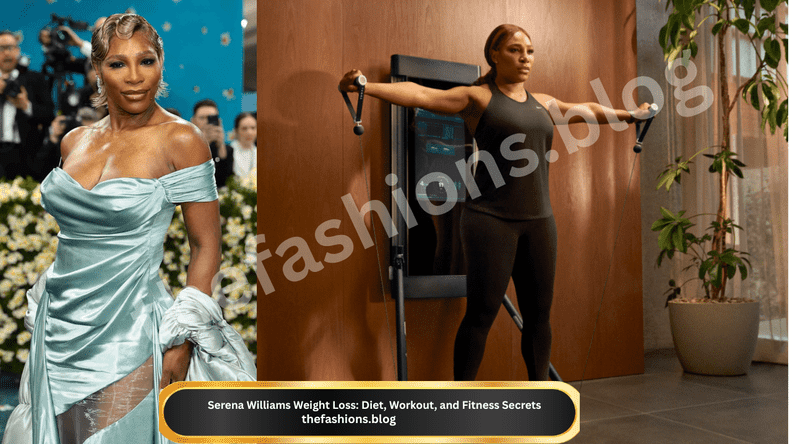
In Vogue, Serena described her at-home routine as “a lot of cardio,” including HIIT workouts, plus stretching and some strength training—while emphasizing listening to her body.
That’s exactly how elite-athlete routines usually work:
- cardio/conditioning builds endurance and energy
- strength training protects joints and keeps muscle
- mobility keeps movement smooth and reduces stiffness
Cardio/HIIT, the Serena way
Serena described doing cardio frequently sometimes daily—and noted that while she likes running, she has to be mindful because her knees can hurt after years of tennis wear-and-tear. She mentioned the elliptical as helpful option too.
Practical takeaway: If you need fat loss health you do not need to run every day. Consistent aerobic (which include low impact alternative) is frequently more sustainable.
Strength training: the “keep the engine strong” part of the journey
Serena has shared postpartum training moments publicly—like returning to weighted squats and easing back into lifting. In a Women’s Health report about one of her videos, she’s described as doing weighted squats and saying it wasn’t her usual weight, but a starting place until she gets back where she wants to be.
That detail is huge because it shows what strong people do when restarting:
- they don’t pretend they’re at 100%
- they start where they are
- they build back steadily
Why strength matters for “weight loss”
When people lose weight, what they really want is usually fat loss while keeping the body firm, capable, and pain-free. Strength training supports:
- muscle retention (better shape + metabolism support)
- stronger joints and connective tissue
- better posture and athletic movement
- confidence (because you feel powerful)
Mobility + recovery: the under-rated “secret” Serena keeps highlighting
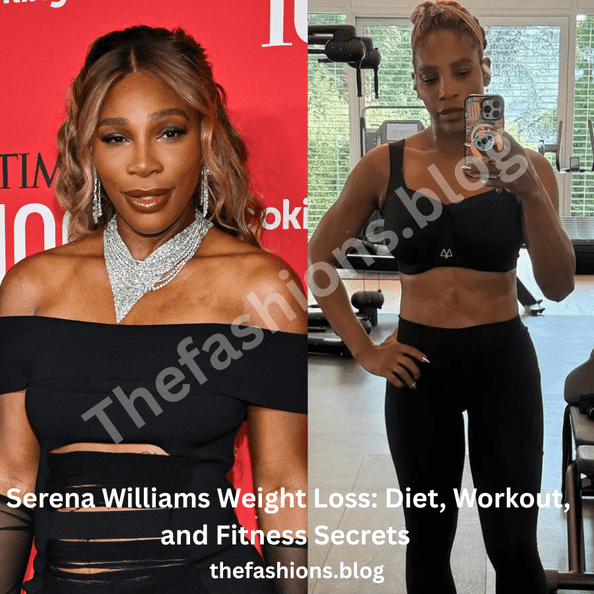
In her Vogue interview, Serena repeatedly stresses listening to her body and being mindful of knee stress from years of tennis.
This is often the missing piece for regular people. You can copy workouts from the internet, but if you ignore:
- sleep
- recovery days
- mobility/strength balance
- pain signals
…you burn out fast.
Practical takeaway: If you need fat loss health you do not need to run. Consistent aerobic (which includes low-impact alternatives) is frequently more sustainable.
The half-marathon goal: shifting from tennis performance to endurance lifestyle
Serena advised PEOPLE she wanted to run a 1/2-marathon through the quit of 2025, and stated she’d come to be even more “obsessed” with eating regimen and exercise than whilst she become gambling professionally—partially because she not burns intense energy like a travelling athlete.
That’s a powerful framing:
- Pro sport = forced fitness (your job)
- Post-sport = chosen fitness (your identity and health)
If you’re trying to lose weight or get fit, the best “celebrity secret” is building non-negotiable habits like an athlete would—even if the workouts are simpler.
A Serena-inspired weekly plan (realistic, not extreme)
This isn’t Serena’s exact routine. It is a practical plan inspired with the useful resource of the pillars she’s publicly discussed: cardio/HIIT, energy, and mobility
Option A: 5 day and week (balanced)
Day 1 – Strength (Lower + Core)
• Squat pattern (goblet squat or machine)
• Hip hinge (RDL or hip thrust)
• Split squat or step-ups
• Core: planks + carries
Day 2 – Cardio (Low impact)
• 30–45 minute steady
Day 3 – Strength (Upper and Core)
• Press (dumbbells or machine)
• Row (cable/dumbbells)
• Pulldown or assisted pull-ups
• Core: anti-rotation + dead bug variations
Day 4 – HIIT (Short + sharp)
• interval of 15 to 20 minute
Example: 30 sec hard to 60 sec easy × 10 rounds
Finish with 10 minute mobility
Day 5 – Athletic / Mixed
• Short cardio warm-up
• Light agility/footwork drills OR a circuit
• Stretching + recovery
2 rest/active recovery days: walking + mobility
Option B: 3 days or week (busy schedule)
• Day 1: Strength full body
• Day 2: Cardio steady + mobile
Consistency not a flawless program, is the biggest victory.
Serena inspired eating habits you can actually follow
Because she’s pointed out plant-forward consuming and being extra intentional about eating regimen and exercise now, here are sensible “copyable” behaviours that align with that vibe.
Habit 1: Anchor meal with protein + fiber
- protein = keeps you happy and maintains muscle
- fiber = maintains gastrointestinal health and controls appetite
Simple examples:
- lentils + vegetables + rice
- tofu stir-fry + greens
- chickpea salad + olive oil dressing
- oatmeal + nuts + fruit
Habit 2: Default to “mostly whole foods” (do not chase perfection)
If you keep 80% of your eating simple and repeatable the 20% does not ruin you.
Habit 3: Build environment that make the right choice easy
- prep 1 to 2 protein bases (lentils/chicken/tofu)
- prep 1 to 2 carb bases (rice/potatoes)
- keep ready vegetables (salad mix, frozen veg)
That’s how athletes eat: repeatable systems.
What not to copy (the mistakes people make with celebrity weight loss)
Mistake 1: Copying depth without recovery
Elite athletes can tolerate greater extent due to the fact their existence is built around training and recuperation. Most people have jobs, strain, and bad sleep. If you replica intensity however pass restoration, your body fights you.
Mistake 2: Thinking “extra aerobic” is usually the solution
Serena herself talks about being attentive to her frame and deciding on decrease-effect cardio options because of knee put on-and-tear.
If you’re sore, infected, or exhausted, “extra” can backfire.
Mistake 3: Turning GLP-1 into a shortcut myth
Serena’s personal framing (in foremost interviews) emphasizes that medicinal drug supported paintings she became already doing—food plan, workout, and way of life changes.
If everybody considers clinical alternatives, it must be with professional guidance.
Conclusion
Serena Williams’ “weight loss secrets” aren’t mysterious. Based on what she’s publicly shared, her results come from a layered technique: steady cardio/HIIT, strength schooling, mobility-targeted healing, a in general plant-based totally food plan, and—importantly—transparent discussion of using GLP-1 remedy as a part of her fitness adventure.
If you want, tell me:
- your goal (fat loss / strength / endurance),
- your weekly time (3, 4, or 5 days),
- any knee/back issue (yes/no),
and I’ll make you a 30-day plan inspired by this same “strength + cardio + mobility” structure.
 3
3
 20
20
 20
20